Economic and Market Commentary

The year has certainly rushed by quickly as we head towards Christmas only 3 months away. It has been a year represented by significant market volatility; tumultuous geopolitics; yet a year defined by continued growth in corporate profitability and the spend on AI appearing to reap rewards in generating that elusive revenue growth and bottom-line profitability.
We have continued to stay the course in regard to our longer-term strategy and asset allocation for our clients. We tend to be contrarian investors and have positioned portfolios towards those assets that represent longer term potential and reduced exposures to those assets that have had stellar returns to mitigate downside risk from continued market uncertainties.
The spend on AI is continuing at unprecedented levels. As it stands now, tech investment in the US is at records highs and now accounts for 4.9% of GDP.
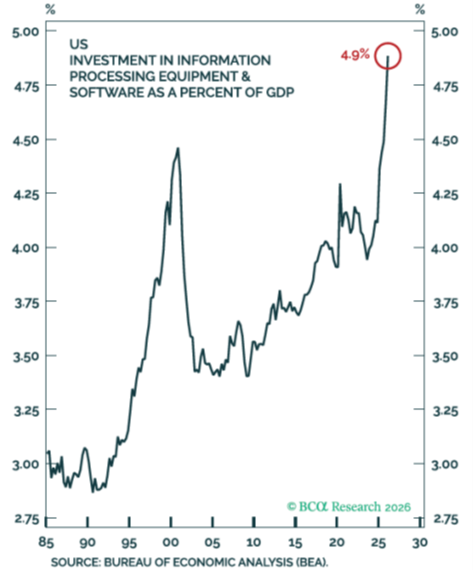
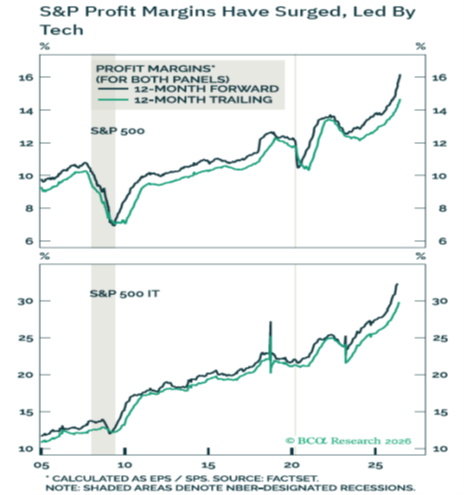
The concern is whether this is a bubble much like the 2001 dotcom bubble. The 2001 tech bubble was predicated on unsustainable rise in P/E ratios with stocks trading at P/Es of 40+ times and some with no earnings to boot. However, in this instance, profit margins have had a massive increase and shortages of semiconductors and power generation equipment will continue to drive demand and margins.
AI adoption rates and spend remains in an uptrend and is still concentrated in a small number of users. In Australia for example, less than 10% of businesses have adopted AI based on figures from Treasury. This is likely to become mainstream, and the usage will expand over time benefiting productivity across all industries, leading to a decrease in inflation and should add to global GDP growth in due course.
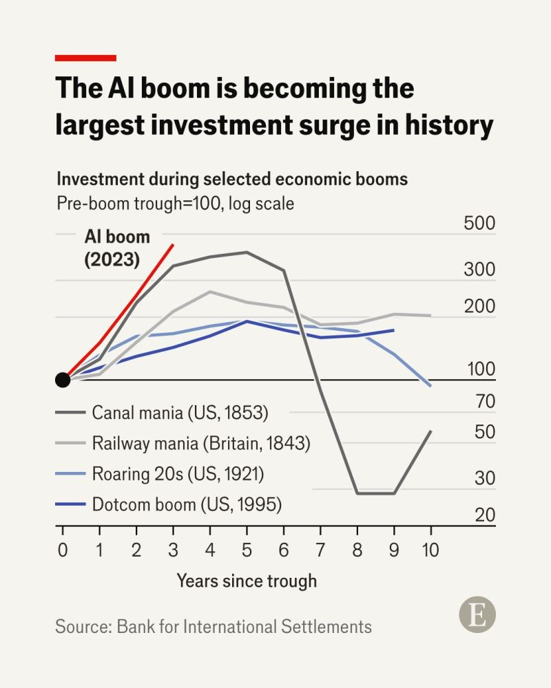
The AI boom is going to be the biggest investment surge in history and is heading towards driving unprecedented growth economically. The ‘roaring 20’s’ were due to the electrification of industries which resulted in enormous economic growth. This AI boom is likely to dwarf even those times.
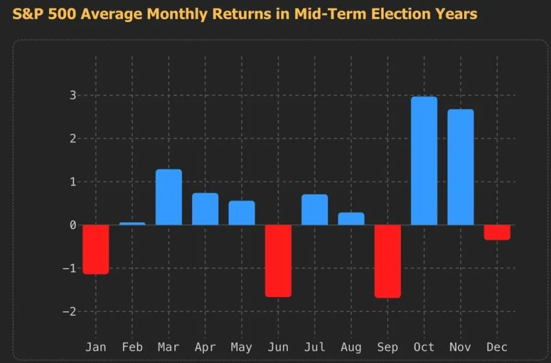
The current geopolitical environment, especially in regard to the closure of the Strait of Hormuz, is driving uncertainty and hence market volatility. Historically, since 1975, September is usually the worst month for the S&P 500 with the second half being generally weaker. This is especially true during mid-term elections as seen in the chart below:
In the short term, sentiment drives market movements. However, equity market investing is about earnings and growth in the long run, and this is what we focus on when putting portfolios together.
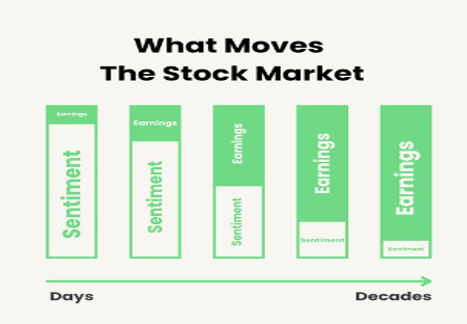
Source: Brian Feroldi
Now, let’s look at what is a hot topic for most Australians ---the residential property market and what our homes are worth now and beyond!
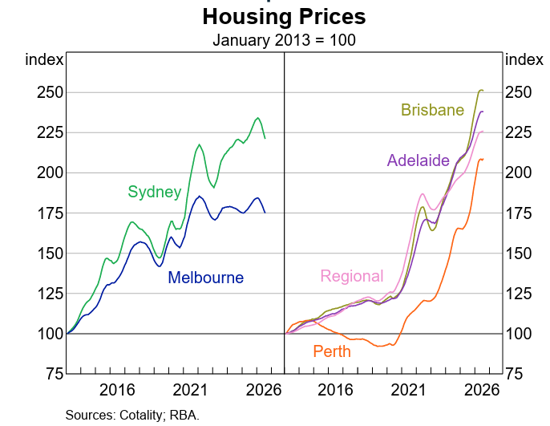
The recent numbers show a decline in property prices in virtually all major capital cities with Sydney, Melbourne, and Canberra leading the pack. This has largely been driven by higher interest rates (and fear of further rate hikes), higher house price rises since covid (affecting affordability), and off course the Federal Budget changes that has weakened investor sentiment. However, it is important to keep the price decline in context given the meteoric rise over the past few years as can be seen in the chart below:
Much like the equity market ups and downs, the property market behaves in similar fashion. However, it is not all bad news. The Australian property market has had far more up ticks then down years:
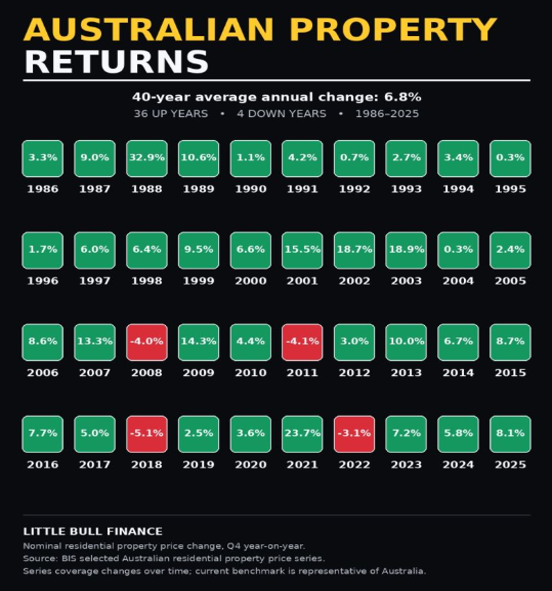
This is why, as of 2026, we are the 5th richest country on average (total wealth divided by the population) and 3rd richest country based on median wealth.
The important point in all of the information above is that markets present opportunities and challenges. Volatility is a constant, driven by economics, sentiment and geopolitics. Having a diversified and highly concerted approach to structuring and managing portfolios with a longer-term mindset drives positive outcomes time and time again, despite short-term gyrations and market downturns which are short-lived.
As always, I leave you with some wise words to ponder:
"Volatility is the new normal; expect it, prepare for it, and profit from it."
-Peter Lynch
"Volatility can be a friend to the long-term investors, but it’s an enemy of the short-term traders."
-John Templeton